Inquiry Question: What are some practical ways I can cultivate a positive and safe culture in my PE classes?

Hi, welcome back for another post! Have you ever wonder what does it mean to have a positive and safe learning environment in PE classes? What does that really look like in a classroom? What are some practical ways so we can achieve that in a PE setting? Today, we are going to answer this inquiry question I had in mind when I first started my AQ Junior course – What are some practical ways I can cultivate a positive and safe culture in my PE classes? I have found three resources that helped me to answer this question of mine. Let’s take a look at each one!

Resource 1 – Scholarly Article

“Promoting Social and Emotional Learning in PE” by Ciotto & Gagnon (2018)

The first one is a scholarly article published by the Journal of Physical Education in 2018. This article titled, “Promoting Social and Emotional Learning in Physical Education” by Ciotto and Gagnon, provides PE teachers with principles and guidelines for developing, implementing, and assessing effective strategies for promoting SEL (Social Emotional Learning) within PE programs.

In the article, Ciotto and Gagnon (2018) claimed the schools that implemented SEL have students who have positive social behaviors, fewer conduct referrals, positive emotional health, and greater academic success. They further discussed the 5 core elements that PE teachers should focus on when they planning their PE programs for their schools and they are:

  1. Self-awareness (the ability to identify, describe, and understand thoughts and emotions)
  2. Self-management (the ability to control one’s thoughts, emotions, and behaviors)
  3. Responsible decision-making (the ability to make respectful choices)
  4. Relationship management (the ability to form and maintain healthy relationships)
  5. Social awareness (the ability to embrace diversity)

This article does not only highlight each of the core competency of the SEL model, it also offers teaching strategies and activity ideas for PE teachers to practically implement the social and emotional learning aspect in their PE programs. You can find all these practical suggestions in the table below!

Excerpted from “Promoting Social and Emotional Learning in PE” (Ciotto & Gagnon, 2018)

The authors also gave examples of instructional practices that PE teachers can implement in their teaching practice:

  • Classroom management strategies that are developmentally appropriate
  • Use of teacher language that encourages student effort and performance
  • Give opportunities for students to make responsible decisions and provide meaningful input
  • Play cooperative games where students can work toward a common goal
  • A balanced instruction: teacher-centered & student-centered
  • Implement SEL elements (mentioned above) in each lesson

Resource 2 – Podcast

“NEW Ontario Canada HPE Curriculum 2019” by Playing Research in HPE (2020)

The second resource I came across was this Podcast Channel called “Playing Research in HPE“. This is a great educational channel for all PE teachers (or anyone who is interested in HPE) who would like to learn more about what the current research has to say about the best practices of HPE. In their 75th episode, “NEW Ontario Canada HPE Curriculum 2019”, the host, Risto Marttinen who is an Assistant Professor at Geroge Mason University in Virginia invited Dan Vigliatore, a PE teacher at the Toronto Catholic District School Board and AQ Instructor at the York University as the guest speaker.

The host of “Playing Research in HPE”
The guest speaker of the 75th episode

In this episode, Vigliatore shared his expertise and explained the newly added strand of Social and Emotional Learning in the new curriculum updated in 2019. This strand is officially the first strand you would see in the curriculum document. It is an intentional focus with intentional planning within the PE lessons. It includes important topics such as stress management, emotional management, positive motivation, coping strategies, healthy relationships, self-awareness, etc. What distinguish this curriculum from other HPE curricula is “the whole child approach” as mentioned in the podcast (14:50). Health is not just fitness, but also mental health, health of others, and how students can be a part of the health of others.

“Strand A: Social-emotional Learning Skills” is the newly added strand in the HPE Curriculum updated in 2019. This strand is intertwined throughout the other three strands. (Excerpted from page 24.)

In the curriculum, specific expectations with prompts examples are also listed for the PE educators to take into considerations when planning their PE programs and what to look for when assessing their students’ social and emotional learning skills.

Resource 3 – Article

“A Safe Space to Play, Learn & Grow” by OPHEA Healthy Schools Healthy Communities (2015)

The third resource I have found is an article posted on OPHEA (a.k.a Ontario Physical and Health Education Association), a registered provincial charity. OPEHA has been in partnership with school boards, public health, government, non-government organizations and companies to develop high quality PE programs and supportive resources since 1921. It is one of the great tools for any PE teachers as it offers teaching tools/materials, safety guidelines for various sports, helpful resources, etc.

Obesity and mental health identified as top health concerns facing ...

OPHEA argues that a “safe space” does not only refer to physical safety where students can participate safely and learn about safe practices, but also emotional safety! Emotional safe space means everyone belongs and every can succeed.

As defined in the article – “A Safe Space to Play, Learn & Grow”, “safe space” allows student to:

  • Feel safe, included, capable of success
  • Take risk and make mistakes in front of their peers
  • Ask questions and express opinions
  • Feel accepted and respected

Practical suggestions for teachers to create a safe and positive learning environment in PE setting:

  • Shifting students’ focus from outcome to process
    • Celebrate students’ accomplishments – big or small
  • Developing positive ways of managing their emotions, solving problems, and interacting with others
  • Putting systems in place to prevent bullying
    • Model positive social interactions
  • Fostering resiliency
    • Teach students how to take care of themselves and manage difficult situations
    • Use growth mindset
    • Teach students to use “I can” statements
    • Let students know they can seek for support and help if needed

I hope this post was helpful to you. I challenge you to implement these suggestions in your classroom/gym, even if it’s just one small thing! To end off, I would like to leave you with this quote by Russ Minnis, a PE teacher in Amherstburg, Ontario:

If kids feel safe, they’ll play. And they’ll want to play more because they felt safe. It foes full circle.

Minnis, 2015

Thanks for tuning in! See you next time!
Learning Resource

Do you remember Riley H.? The Junior learner that we met in my other post? Well, today, I am going to further use Riley as an example and share a learning resource that I think it’s going to benefit Riley’s numeracy journey.

Transition from Grade 10 – 12 Provincial Exams to Assessments of ...

In my previous post, I shared that Riley is one of my tutoring students and I have been working with him to support his numeracy journey for the past 6 months. As a lot of us know, due to the current pandemic situation, there is a high demand of flexibility and adaptability in learning for both teachers and the learners. Because I was no longer able to have tutoring sessions with Riley in person, I had to be flexible and adaptable while we met online. If you recall, Riley loves Kahoot! He loves it whenever I incorporate in our time together. It’s a great assessment tool – good for diagnostic, formative, and even summative assessment. It’s also a fun tool for Riley to use it as a brain break. Depending on the day, I ensure I can maximize this tool to benefit Riley’s learning.

Getting started with online learning: how to provide remote ...

However, Kahoot is not the ONLY learning resource I love. During this pandemic, I was researching many other educational tools that I can use to enrich Riley’s learning and yet, I have learned that the good old YoutTube really did not disappoint me. It turned out to be very useful for Riley!

YouTube launches a new logo design | Creative Bloq

As mentioned before, Riley is very good at mental math and he has a great number sense. He is also a visual learner. But ironically, one of his weakness is spatial reasoning which means he has a hard time to imagine in three-dimensions and to move objects around in his mind. As such, he was really struggling when his math teacher at school started introducing “Transformation: translation, reflection, and rotation” to his class. I remember it was even harder to explain these concepts to him when we had a screen between us. Then, that was when I stumbled on this YouTube Channel – Planet Nutshell!

Specifically, Riley struggled to visualize the concept of Rotation in his head and this video was his lifesaver! I still remember he loved the video so much that he asked me to replay it to him multiple times throughout our session. He ended up watching the “Reflection” video and “Translation” video even though he had no trouble understanding those concepts. His favorite part is when the video sings “Math Short” and he would just laugh and beg me to replay that part over and over again.

In conclusion, I think this YouTube Channel – Planet Nutshell, the “Math Shorts” Series, is a great learning resource for students who need a bit more support with spatial reasoning, who are visual learner, and who enjoy the appeal to the video editing.

Thank you for tuning in! Hope you enjoyed!

Out in the Community

I have chosen to focus on Grade 4 Science: Light & Sound Unit for my Integrated Lesson Plan project. In this post, I will share how I will engage my students with the local community and enrich their learning in the classroom.

Our Community

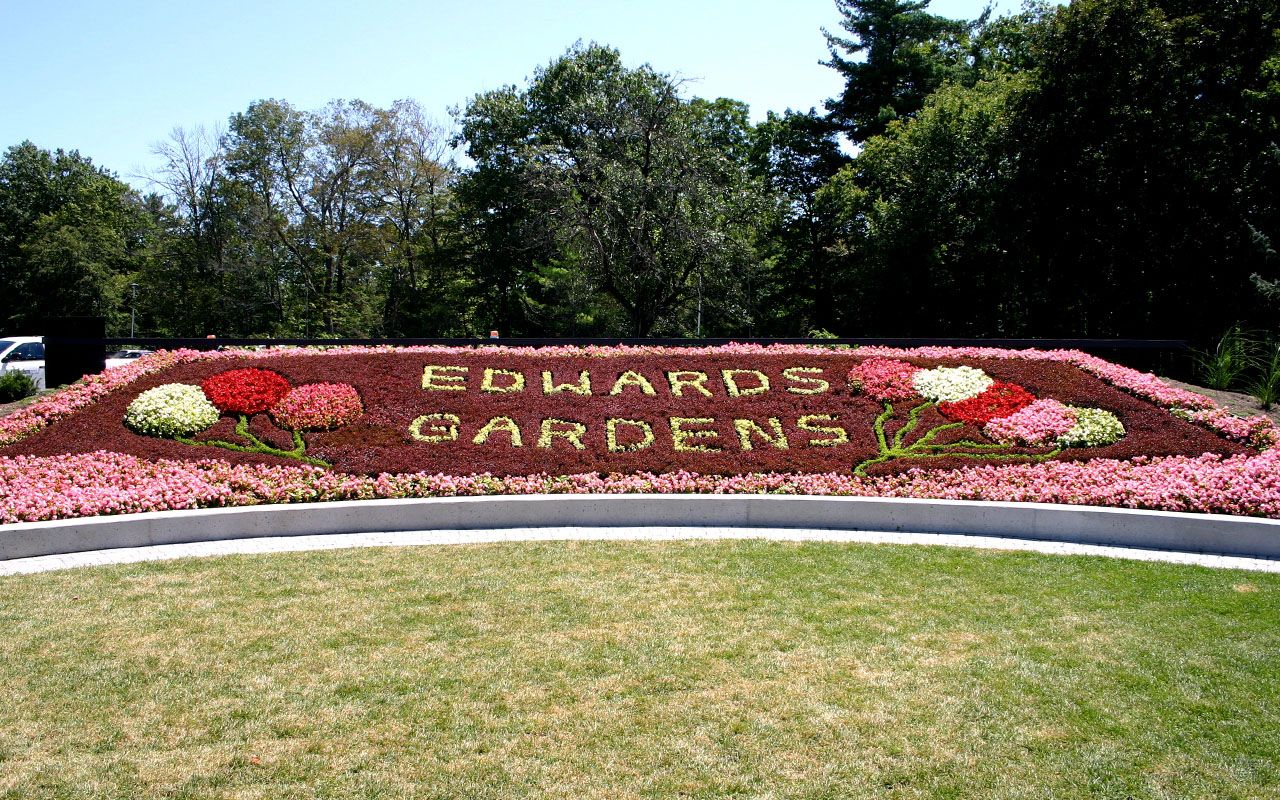
Edwards Garden –  is a botanical garden, also the site of the Toronto Botanical Garden, a private not-for profit organization previously called the Civic Garden Centre. 

Edwards Gardens - City of Toronto
Located on the southwest corner of Leslie Street and Lawrence Avenue East in Toronto, Ontario, Canada.

This local garden features perennials and roses on the uplands and wildflowers, rhododendrons and an extensive rockery in the valley. On the upper level of the valley, there is an arboretum next to the Children’s Teaching Garden. This park also offers programs, garden tours, nature day camps,  field trips and an extensive horticultural library.

Learning Goals

This outing aims to help students to identify the natural and artificial lights within their community as well as helping them to think about energy consumption and sustainability (see “Post-visit” section to learn more about this point).

Pre-visit

Before the visit, I will introduce the Scavenger Hunt Activity to the students. We will also discuss the safety considerations and expectations when we are out and about. Explain to students that this is the handout that they will be filling out when we are at Edwards Garden.

Post-visit

When we return to the classroom the next day, we will have a whole class (carpet) discussion about their answers. Furthermore, facilitate an open-ended conversation about energy consumption and sustainability with the class. Example questions include:
1) How much energy do you think the artificial light sources use?
2) Where does that energy come from?
3) Should we turn off the lights when we leave the room? Why would this be a good idea?

Library Of Preschool Circle Time Clipart #1882690 - PNG Images - PNGio

The Junior Learner

In the course, we looked at the theoretical junior learner. I see many connections to the junior learners that I have worked with. Today, I am going to share my experience with one of my tutoring students. Let’s call him Riley in this post!

Learner Profile

March | 2016 | Kim Lee Learning
Meet Riley!
  • Name: Riley H.
  • Grade: 5
  • Subject: Mathematics
  • Strengths: curious, loves challenges, “go-getter”, mental math, critical thinking, decisive
  • Weaknesses: impatience, unorganized, prideful

Connections I Noticed…

1) Growth Mindset

Riley loves challenges. He loves it whenever the math problems are extra difficult. He often asks to solve math problems that are above his grade level and enjoys learning new math concepts. Even when he doesn’t understand the question, he would ask “why” and persist to find out the answer. Like the image we discussed in class, I am happy to say that Riley certainly has demonstrated these traits during my time with him.

2) TPACK – Technological Pedagogical Content Knowledge

Riley poses characteristics of a 21st century learner, a modern, and digital learner. He learns to use various applications quickly (ie. Zoom) and is responsive to game based learning tools (ie. IXL math, Knowledge Hook, Kahoot). Due to his energetic nature, I have to be creative with my engagement tools in order to maximize his learning. In my tutoring session, I often utilize technology to engage Riley and support his learning. I personally think it always does the trick! I noticed that these tools really help him to stay focused and interact with the content that are being taught to him.

3) Maker Space Mindset

Last but not least, in the “Rethinking Learning” video, I resonated strongly to the idea of “becoming the producer and the creator”, instead of just soaking in information like a sponge. I personally also believe in proactive learning where students learn best when you are not just synthesizing the content but they are creating their very own product WITH the knowledge. In Riley’s case, he created his very own Kahoot game to demonstrate his knowledge in the 2-Steps Algebra unit. I still remember when Riley said, “It was so fun, can I make my own Kahoot again for this unit? I want to challenge my siblings.”

Kahoot! - Tech-nically Middle

I hope you enjoy reading my experience with Riley. Feel free to leave a comment below and I would love to hear about your experiences with Junior learners!

Guiding Question

As a recent teacher college graduate, I am eager to learn more about the different ways to engage students. I look forward to apply what I have learned previously from teacher college, may it be students’ needs, interests, or their readiness to learn, I should remember that all these apply to all grades. These will always be factors that affect how I approach various learners. Throughout the course, I have the following questions I would like to keep in mind:

  • How do Junior learners learn best?
    • Since I specialized in the intermediate/senior stream, I am certainly eager to learn more about junior learners and how they learn best. With some non-traditional teaching experience with this age group, I often find myself asking, “am I being too strict?” I think being this course would be very helpful for me to understand the nature of this age group and help me to lay down some important routines for the junior learners.
  • How to integrate emotion regulation in Junior learners during PE classes?
    • As a PE educator, I understand that PE can be “emotional” at times and it gives opportunity for students to experience various of emotions. Students may feel excited and happy when they scored a point, disappointed or frustrated when they lost a game, and more… I would love to learn the ways to help students to be aware of their emotions and help them to self regulate, as I believe this is a life skill. I wonder how a PE teacher can integrate that in their classes and how I can cultivate a strong culture for emotion regulation. I would love to hear from what other colleagues have to say and learn from their experience.
Amazon.com: Feelings Chart for Kids (Emotions Poster -18X24 ...
  • What are some practical ways I can cultivate a positive and safe culture in my classroom/gym?
    • As a new elementary PE/classroom teacher in the fall, I would love to learn more about some practical ways that I can build a positive and safe culture in my classroom. I personally believe that it is important to set up a healthy norm for my students. From my experience, I learned that students engage most and learn best when they are in an inclusive learning community and when they have a strong rapport with me. However, I am only familiar with doing so with the older grades, not the younger students. Hence, I would love to see what ideas others have to offer.

Finally, I can’t wait to learn more about what it is like to be an elementary teacher:

A day in the life of an elementary teacher - Today's Parent